




درس اول زبان انگلیسی دوازدهم
جواب درس اول زبان دوازدهم
معنی صفحه 15 زبان انگلیسی دوازدهم
Helping others lowers blood pressure.
کمک کردن به دیگران فشار خون را کاهش میدهد.
Kindness boosts energy and strength in elderly people.
مهربانی باعث افزایش انرژی و قدرت بدنی در افراد سالمند میشود.
Teenagers who help others are more successful in life.
نوجوانانی که به دیگران کمک میکنند، در زندگی موفقتر هستند.
Listening to the advice of older people improves our lives.
گوش دادن به توصیههای افراد مسن، زندگی ما را بهتر میکند.
Taking care of grandchildren increases brain function and memory.
مراقبت از نوهها عملکرد مغز و حافظه را افزایش میدهد.
معنی و جواب صفحه 17 زبان دوازدهم
A. Match the pictures with the following sentences.
تصاویر انتخاب شده را با جملات زیر تطبیق دهید.
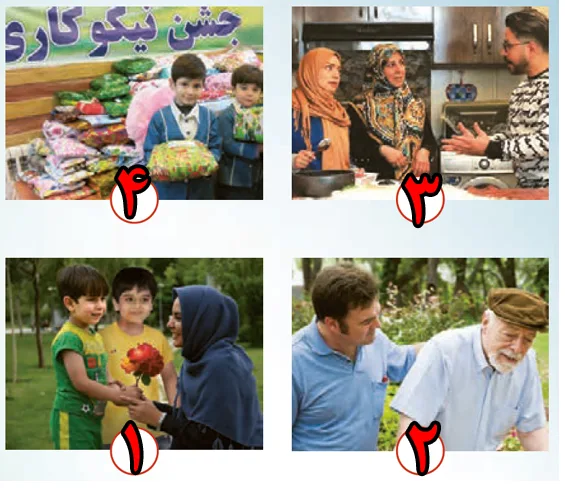
1 – Children should respect their parents.
کودکان باید به والدین خود احترام بگذارند.
2 – We have to take care of elderly people.
ما باید از افراد سالمند مراقبت کنیم.
3 – Family members should listen to each other.
اعضای خانواده باید به حرفهای یکدیگر گوش دهند.
4 – We can help many people by donating what they need.
ما میتوانیم با بخشیدن چیزهایی که دیگران به آنها نیاز دارند، به افراد زیادی کمک کنیم.
جواب صفحه 18 زبان انگلیسی دوازدهم
B. Why are these people famous?
1 – Rizali Khajavi
He saved a train from a bad accident because of a landslide.
او یک قطار را به دلیل ریزش کوه از یک حادثه بد نجات داد.
2 – Hassan Omidzadeh
He saved his students from a fire and was badly hurt.
او دانشآموزانش را از آتشسوزی نجات داد و خودش به شدت آسیب دید.
3 – Jabbar Baghcheban
He established the first school for deaf-mute students in Tabriz.
او نخستین مدرسه برای دانشآموزان کر و لال را در تبریز تأسیس کرد.
4 – Abbas Babaei
He was one of the most professional pilots of his time, and he became a martyr in the Iran-Iraq War.
او یکی از حرفهایترین خلبانان زمان خود بود و در جنگ ایران و عراق به شهادت رسید.
How do you feel when you read about these people?
I am very happy to have these kinds of people in my country. They are good role models for everyone.
من بسیار خوشحالم که چنین افرادی در کشورم وجود دارند. آنها الگوهای خوبی برای همه هستند.
C. Write appropriate nouns after the following adjectives. Then check (+) the positive adjectives.
برای صفات زیر اسم های مناسب بنویسید. صفت ها را با علامت تیک بزنید.
| Positive (✅) | English | معنی |
| ✅ | a polite girl | یک دختر مؤدب |
| – | a cruel killer | یک قاتل بیرحم |
| – | some lazy students | چند دانشآموز تنبل |
| ✅ | two kind policemen | دو پلیس مهربان |
| ✅ | a loving cat | یک گربه دوستداشتنی |
| ✅ | some careful drivers | چند راننده محتاط |
ترجمه صفحه 19 و 20 زبان انگلیسی دوازدهم
Sara has been in the Children’s Medical Center for a week. She has caught a terrible flu. The doctor told her to stay there to get better. There is a photograph of an old man on the wall. While the nurse is taking her temperature, they start talking.
سارا یک هفته است که در مرکز پزشکی کودکان بستری است. او به آنفلوانزای شدیدی مبتلا شده است. پزشک به او گفته است که برای بهبودی در آنجا بماند. عکس یک مرد سالخورده روی دیوار نصب شده است. در حالی که پرستار دمای بدن او را اندازه میگیرد، آنها شروع به صحبت میکنند.
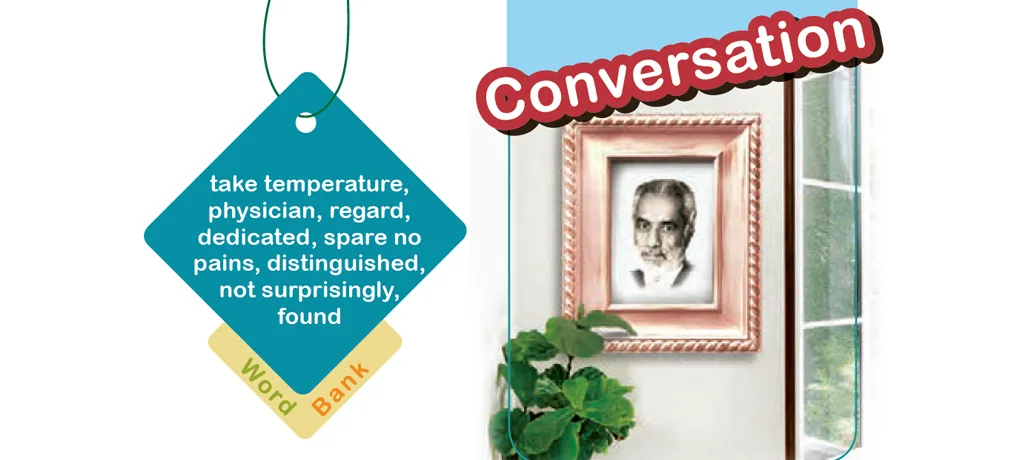
Sara: Excuse me, who is that man in the picture?
سارا: ببخشید، آن مردی که در عکس است چه کسی است؟
Nurse: Oh, don’t you know him? Have you ever heard of Dr. Mohammad Gharib?
پرستار: اوه، او را نمیشناسی؟ تا به حال اسم دکتر محمد قریب را شنیدهای؟
Sara: I guess I have only seen his name in my English book, but I’m not sure about it.
سارا: فکر میکنم فقط نام او را در کتاب زبان انگلیسیام دیدهام، اما مطمئن نیستم.
Nurse: Dr. Gharib was a famous physician.
پرستار: دکتر قریب یک پزشک مشهور بود.
Sara: Oh,… can you tell me a little about his life?
سارا: اوه… میتوانید کمی درباره زندگی او برایم بگویید؟
Nurse: Dr. Gharib was born in Tehran in 1288. After receiving his diploma, he went abroad to study medicine. In 1316 he became a physician and then came back to his homeland. In 1347 this center was founded by Dr. Gharib and one of his close friends.
پرستار: دکتر قریب در سال ۱۲۸۸ در تهران متولد شد. پس از گرفتن دیپلم، برای تحصیل در رشته پزشکی به خارج از کشور رفت. در سال ۱۳۱۶ پزشک شد و سپس به میهن خود بازگشت. در سال ۱۳۴۷ این مرکز توسط دکتر قریب و یکی از دوستان صمیمیاش تأسیس شد.
Sara: Really? I didn’t know that.
سارا: واقعاً؟ این را نمیدانستم.
Nurse: Dr. Gharib was also a generous man. He spared no pains to cure sick children. He was very friendly and helpful to poor families. Not surprisingly, he was regarded as a dedicated physician.
پرستار: دکتر قریب همچنین مردی سخاوتمند بود. او برای درمان کودکان بیمار از هیچ تلاشی دریغ نمیکرد. او با خانوادههای فقیر بسیار مهربان و یاریرسان بود. به همین دلیل، او را پزشکی فداکار میدانستند.
Sara: It’s a pity! I didn’t know such a great man.
سارا: حیف! من چنین مرد بزرگی را نمیشناختم.
Nurse: He was known as a distinguished university professor, too. The first Persian textbook on children’s diseases was written by him. He taught medicine to thousands of students.
پرستار: او همچنین به عنوان یک استاد برجسته دانشگاه شناخته میشد. نخستین کتاب درسی فارسی درباره بیماریهای کودکان را او نوشت. او علم پزشکی را به هزاران دانشجو آموزش داد.
Sara: Oh, what a great man he was!
سارا: اوه، چه مرد بزرگی بود!
Nurse: By the way, it might be interesting to know that your physician was one of Dr. Gharib’s students!
پرستار: راستی، شاید برایت جالب باشد که بدانی پزشک معالج تو یکی از شاگردان دکتر قریب بوده است!
Sara: Really?! That’s interesting!
سارا: واقعاً؟! خیلی جالب است!
جواب سوالات صفحه 20 زبان دوازدهم
Answer the following questions orally.
سوالات زیر را به صورت شفاهی پاسخ دهید.
1 – When was Dr. Gharib born?
Dr. Gharib was born in 1288.
دکتر قریب در سال ۱۲۸۸ متولد شد.
2 – Why was Dr. Gharib regarded as a kind physician?
Because he spared no pains to cure sick children and helped poor families.
زیرا او برای درمان کودکان بیمار از هیچ تلاشی دریغ نمیکرد و به خانوادههای فقیر کمک میکرد.
3 – Have you seen Dr. Gharib TV series?
Yes, I have.
بله، دیدهام..
جواب صفحه 21 و 22 زبان انگلیسی دوازدهم
A. Look, Read and Practice
نگاه کنید، بخوانید و تمرین کنید.
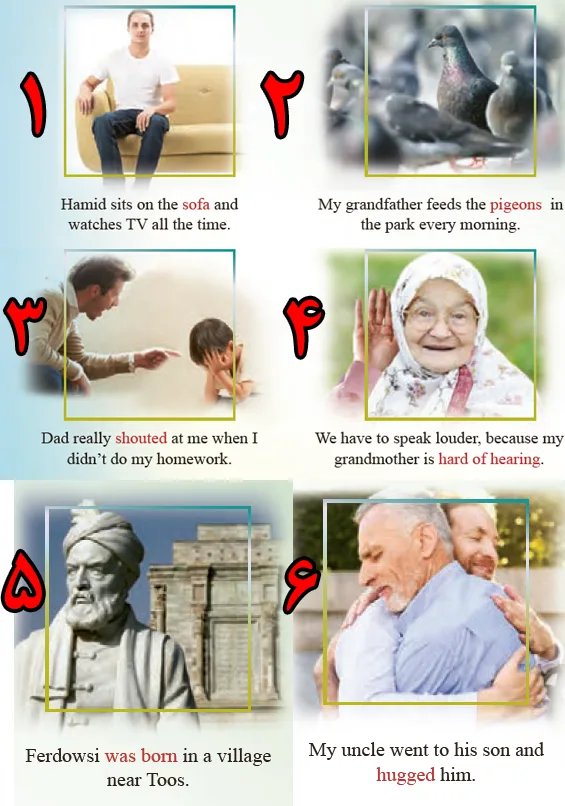
1 – Hamid sits on the sofa and watches TV all the time.
حمید همیشه روی کاناپه مینشیند و تلویزیون تماشا میکند.
2 – My grandfather feeds the pigeons in the park every morning.
پدربزرگم هر روز صبح در پارک به کبوترها غذا میدهد.
3 – Dad really shouted at me when I didn’t do my homework.
وقتی تکالیفم را انجام ندادم، پدرم واقعاً سر من داد زد.
4 – We have to speak louder because my grandmother is hard of hearing.
ما باید بلندتر صحبت کنیم، چون مادربزرگم کمشنوا است.
5 – Ferdowsi was born in a village near Toos.
فردوسی در روستایی نزدیک شهر توس به دنیا آمد.
6 – My uncle went to his son and hugged him.
عمویم به سمت پسرش رفت و او را در آغوش گرفت.
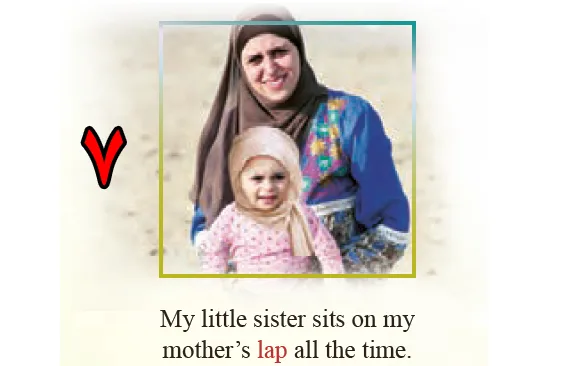
7 – My little sister sits on my mother’s lap all the time.
خواهر کوچکم همیشه روی دامن مادرم مینشیند.
معنی صفحه 23 زبان انگلیسی دوازدهم
B.Read and Practice.
بخوانید و تمرین کنید.
burst into tears: to cry suddenly – بهطور ناگهانی شروع به گریه کردن
Aida burst into tears when she saw her score.
آیدا وقتی نمرهاش را دید، ناگهان شروع به گریه کرد.
repeatedly: many times – بارها، به دفعات زیاد
I’ve told Mohsen repeatedly to talk politely to his teachers.
بارها به محسن گفتهام که با معلمانش مؤدبانه صحبت کند.
forgive: to stop being angry with someone – بخشیدن؛ دیگر از کسی عصبانی نبودن
Mom forgave me for breaking the vase.
مادرم مرا به خاطر شکستن گلدان بخشید.
calmly: in a quiet way – با آرامش، بهصورت آرام
He always speaks slowly and calmly.
او همیشه آرام و با طمأنینه صحبت میکند.
diary: a book in which you record your thoughts or feelings or what has happened every day. – دفتر خاطرات؛ دفتری که احساسات، افکار یا اتفاقات روزانه در آن نوشته میشود
I have kept a diary for twelve years.
من یک دفتر خاطرات را ۱۲ سال هست که نگه داشتم
***
C. Go to Part ‘Vocabulary’ of your Workbook and do B and C
به قسمت “واژگان” کتاب کار خود بروید و B و C را انجام دهید.
معنی ریدینگ صفحه 23 و 24 زبان انگلیسی دوازدهم
Respect your Parents – به پدر و مادرتان احترام بگذارید
On a spring morning, an old woman was sitting on the sofa in her house. Her young son was reading a newspaper. Suddenly a pigeon sat on the window.
در یک صبح بهاری، پیرزنی روی کاناپه خانهاش نشسته بود و پسر جوانش مشغول خواندن روزنامه بود. ناگهان کبوتری روی لبه پنجره نشست.
The mother asked her son quietly, “What is this?” The son replied: “It is a pigeon”. After a few minutes, she asked her son for the second time, “What is this?” The son said, “Mom, I have just told you, ‘It is a pigeon, a pigeon’.” After a little while, the old mother asked her son for the third time, “What is this?” This time the son shouted at his mother, “Why do you keep asking me the same question again and again? Are you hard of hearing?”
مادر با آرامش از پسرش پرسید: «این چیست؟» پسر پاسخ داد: «یک کبوتر است.» چند دقیقه بعد، مادر برای دومین بار همان سؤال را پرسید. پسر گفت: «مامان، همین الان به شما گفتم، این یک کبوتر است، یک کبوتر!» کمی بعد، مادر سالخورده برای سومین بار همان سؤال را تکرار کرد. این بار پسر با عصبانیت سر مادرش فریاد زد: «چرا مدام یک سؤال را بارها و بارها از من میپرسی؟ مگر کمشنوا هستی؟»
A little later, the mother went to her room and came back with an old diary. She said, “My dear son, I bought this diary when you were born”. Then, she opened a page and kindly asked her son to read that page. The son looked at the page, paused and started reading it aloud:
کمی بعد، مادر به اتاقش رفت و با یک دفتر خاطرات قدیمی برگشت. او گفت: «پسر عزیزم، این دفتر خاطرات را زمانی خریدم که تو به دنیا آمدی.» سپس صفحهای را باز کرد و با مهربانی از پسرش خواست آن را بخواند. پسر به صفحه نگاه کرد، لحظهای مکث کرد و شروع کرد آن را با صدای بلند بخواند.
«Today my little son was sitting on my lap, when a pigeon sat on the window. My son asked me what it was 15 times, and I replied to him all 15 times that it was a pigeon. I hugged him lovingly each time when he asked me the same question again and again. I did not feel angry at all. I was actually feeling happy for my lovely child.»
«امروز پسر کوچکم روی دامنم نشسته بود که ناگهان کبوتری روی پنجره نشست. پسرم پانزده بار از من پرسید آن چیست و من هر پانزده بار با حوصله به او پاسخ دادم که یک کبوتر است. هر بار که همان سؤال را دوباره میپرسید، او را با محبت در آغوش میگرفتم. اصلاً عصبانی نمیشدم؛ بلکه از داشتن فرزند دوستداشتنیام احساس خوشحالی میکردم.»
Suddenly the son burst into tears, hugged his old mother and said repeatedly, “Mom, mom, forgive me; please forgive me.” The old woman hugged her son, kissed him and said calmly, “We must care for those who once cared for us. We all know how parents cared for their children for every little thing. Children must love them, respect them, and care for them.”
ناگهان پسر به گریه افتاد، مادر سالخوردهاش را در آغوش گرفت و بارها گفت: «مامان، مامان، مرا ببخش؛ خواهش میکنم مرا ببخش.» پیرزن نیز پسرش را در آغوش گرفت، او را بوسید و با آرامش گفت: «ما باید از کسانی مراقبت کنیم که روزی از ما مراقبت کردهاند. همه ما میدانیم که پدر و مادرها برای کوچکترین نیازهای فرزندانشان زحمت میکشند و از آنها مراقبت میکنند. فرزندان نیز باید پدر و مادر خود را دوست داشته باشند، به آنها احترام بگذارند و از آنها مراقبت کنند.»
جواب صفحه 26 زبان انگلیسی دوازدهم
A. Read the passage. Generate at least five questions with the question starters and then answer them.
آ. متن را بخوانید. پنج سوال با استفاده از سوال آغازکننده ها بسازید و سپس پاسخ دهید.
1. When was the old diary bought?
It was bought when the son was born.
دفتر خاطرات زمانی خریده شد که پسر به دنیا آمد.
2. Where was the old woman sitting?
She was sitting on the sofa in her house.
او روی کاناپه خانهاش نشسته بود.
3. What sat on the window?
A pigeon sat on the window.
یک کبوتر روی پنجره نشست.
4. Why did the son burst into tears?
Because he realized his mistake and felt sorry for his mother.
زیرا متوجه اشتباه خود شد و از رفتارش با مادرش پشیمان شد.
5. Who forgave the son?
His mother forgave him.
مادرش او را بخشید.
***
B. Skim the ‘Reading’. Write its main idea.
ب. متن را به طور سطحی بخوانید و ایده اصلی آن را بنویسید.
Children must love their parents, respect them, and care for them.
معنی: کودکان باید والدینشان را دوست داشته باشند، احترام بگذارند و مراقب آنها باشند.
***
C. Read the ‘Reading’. Find what these words refer to.
ج. متن را بخوانید. آنچه که این لغات به آنها برمی گردند را پیدا کنید.
her (paragraph 1, line 2) the old woman
his (paragraph 2, line 5) the son
you (paragraph 3, line 2) son
me (paragraph 4, line 5) the old woman
them (paragraph 5, line 6) parents
معنی وتوضیح صفحه 27 زبان انگلیسی دوازدهم
VOCABULARY DEVELOPMENT – گسترش واژگان
Collocations (همآیندها)
A collocation is two or more words that often go together. Collocations tell us which words can come before or after other words. These combinations just sound ‘right’ to native speakers, who use them all the time. On the other hand, other combinations may be unnatural and just sound ‘wrong’.
همآیند (Collocation) به دو یا چند واژهای گفته میشود که معمولاً در کنار یکدیگر به کار میروند. همآیندها به ما نشان میدهند که چه واژههایی به طور طبیعی قبل یا بعد از واژههای دیگر میآیند. این ترکیبها برای افراد بومی زبان انگلیسی کاملاً طبیعی و درست به نظر میرسند و آنها همیشه از همین ترکیبها استفاده میکنند. در مقابل، برخی ترکیبهای دیگر اگرچه از نظر دستور زبان ممکن است درست باشند، اما برای انگلیسیزبانان طبیعی نیستند و نادرست به نظر میرسند.
fast food but quick meal. It would not be normal to say quick food or fast meal.
میگوییم fast food (فستفود) و quick meal (غذای سریع)، اما گفتن quick food یا fast meal طبیعی نیست.
strong wind but heavy rain. It would not be normal to say heavy wind or strong rain.
میگوییم strong wind (باد شدید) و heavy rain (باران شدید)، اما heavy wind یا strong rain کاربرد طبیعی ندارند.
make a mistake but do exercise. It would not be normal to say do a mistake or make exercise.
میگوییم make a mistake (اشتباه کردن) و do exercise (ورزش کردن)، اما do a mistake یا make exercise نادرست و غیرطبیعی هستند.
Or in the Reading, you can see the following collocations:
همچنین در متن درس، همآیندهای زیر را مشاهده میکنید:
read a newspaper (NOT study a newspaper)
read a newspaper = روزنامه خواندن
(نه study a newspaper)
sit on the sofa (NOT sit at the sofa)
sit on the sofa = روی کاناپه نشستن
(نه sit at the sofa)
hard of hearing (NOT difficult of hearing)
hard of hearing = کمشنوا بودن
(نه difficult of hearing)
جواب صفحه 28 زبان انگلیسی دوازدهم
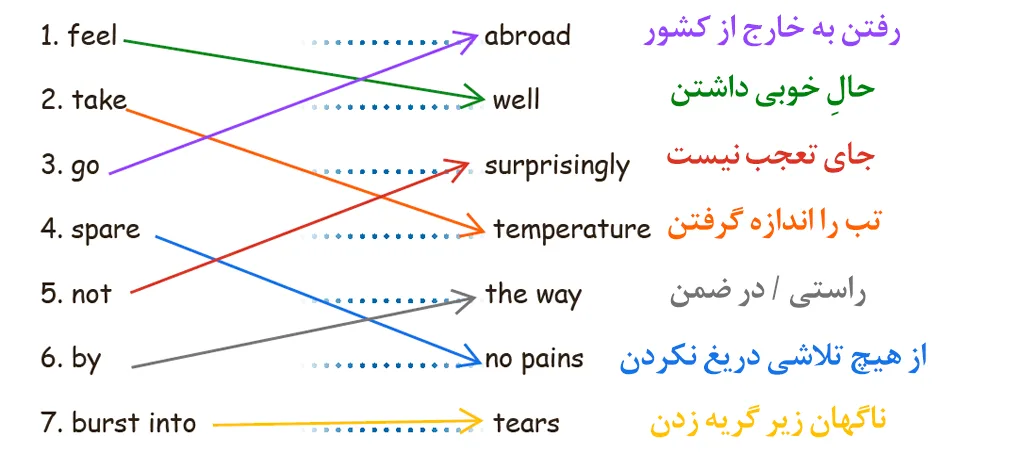
A. Without looking back at the Conversation, make collocations by matching the words on the left with the ones on the right column.
آ. بدون اینکه به مکالمه نگاه کنید. کالوکیشنها را با جفت کردن واژههای سمت چپ با واژههای ستون راست بسازید.
B. With a classmate, check the answers by looking for the collocations in the Conversation. Use each collocation in a new sentence.
در تمرین دوم به کمک همکلاسی خود نیاز دارید. باید پاسخهای یکدیگر را چک کرده و با این ترکیبات جملات جدیدی بسازید.
1. go abroad
My brother wants to go abroad to continue his studies.
برادرم میخواهد برای ادامه تحصیل به خارج از کشور برود.
2. feel well
I don’t feel well today, so I won’t go to school.
امروز حالم خوب نیست، بنابراین به مدرسه نمیروم.
3. not surprisingly
Not surprisingly, Ali got the highest score in the exam because he studied hard.
جای تعجب نیست که علی بالاترین نمره امتحان را گرفت، زیرا سخت درس خوانده بود.
4. take someone’s temperature
The nurse took my temperature before the doctor arrived.
پرستار قبل از رسیدن پزشک، دمای بدنم را اندازه گرفت.
5. by the way
By the way, have you finished your homework?
راستی، تکالیفت را تمام کردهای؟
6. spare no pains
Our teacher spared no pains to help us learn English better.
معلم ما برای اینکه انگلیسی را بهتر یاد بگیریم، از هیچ تلاشی دریغ نکرد.
7. burst into tears
The little girl burst into tears after she lost her favorite toy.
دختر کوچولو بعد از اینکه اسباببازی مورد علاقهاش را گم کرد، ناگهان شروع به گریه کرد.
معنی صفحه 29 زبان انگلیسی دوازدهم
A.Read the following texts.
آ. متن های زیر را بخوانید.
Hafez – حافظ
Hafez is known to be one of the most famous Persian poets of all time. He was born sometime between the years 1310 and 1337 A.D. in Shiraz. In his childhood, he received religious education.
حافظ به عنوان یکی از مشهورترین شاعران فارسیزبان در تمام دوران شناخته میشود. او در فاصله سالهای ۱۳۱۰ تا ۱۳۳۷ میلادی در شهر شیراز به دنیا آمد. در دوران کودکی، آموزشهای دینی را فرا گرفت.
He is called Hafez because he learned the Holy Quran by heart. Hafez is mostly remembered for a special type of poetry that is called Ghazal. Emotions and ethics are used in Ghazals a lot.
به او «حافظ» میگویند، زیرا قرآن کریم را از بر حفظ کرده بود. حافظ بیشتر به خاطر سرودن نوعی شعر به نام «غزل» شناخته میشود. در غزلهای او احساسات و مفاهیم اخلاقی جایگاه ویژهای دارند.
The collection of his poems is called Divan. It has been translated into countless languages including German, English and French. Hafez is known to be the inspiration for many poets and authors around the world.
مجموعه اشعار او «دیوان حافظ» نام دارد. این اثر به زبانهای بیشماری از جمله آلمانی، انگلیسی و فرانسوی ترجمه شده است. حافظ الهامبخش بسیاری از شاعران و نویسندگان در سراسر جهان بوده و به همین دلیل از جایگاه ویژهای در ادبیات جهان برخوردار است.
***
B. Read the following example sentences.
جمله های مثالی زیر را بخوانید.
| Active | Passive |
| She makes pancakes every morning.او هر صبح پنکیک درست میکند. | Pancakes are made every morning.پنکیکها هر صبح درست میشوند. |
| Ali broke the window yesterday.علی دیروز پنجره را شکست. | The window was broken yesterday.پنجره دیروز شکسته شد. |
| They have fixed the cars.آنها ماشینها را تعمیر کردهاند. | The cars have been fixed.ماشینها تعمیر شدهاند. |
| Alexander Fleming discovered penicillin.الکساندر فلمینگ پنیسیلین را کشف کرد. | Penicillin was discovered by Alexander Fleming.پنیسیلین توسط الکساندر فلمینگ کشف شد. |
| Scientists find solutions to problems.دانشمندان راهحلهایی برای مشکلات پیدا میکنند. | Solutions to problems are found by scientists.راهحلهایی برای مشکلات توسط دانشمندان پیدا میشوند. |
| Doctors have made a new medicine to cure cancer.پزشکان یک داروی جدید برای درمان سرطان ساختهاند. | A new medicine has been made by doctors to cure cancer.یک داروی جدید برای درمان سرطان توسط پزشکان ساخته شده است. |
جواب صفحه 30 زبان انگلیسی دوازدهم
C. Tell your teacher how ‘passive voice’ is made.
ج. به معلمتان بگویید “حالت مجهول” چگونه ساخته می شود.
جواب:
حالت مجهول (Passive Voice) چگونه ساخته میشود؟
- در زبان انگلیسی، ساختار مجهول به صورت زیر ساخته میشود:
۱- از فعل to be به عنوان فعل کمکی استفاده میشود.
۲- مفعول جمله معلوم به ابتدای جمله میآید و به نهاد جمله مجهول تبدیل میشود.
۳- فعل اصلی به صورت قسمت سوم فعل (Past Participle / V3) استفاده میشود.
فرمول:
Object + be + V3 + (by + Subject)
مفعول + فعل be + قسمت سوم فعل + (توسط فاعل)
مثال:
Active: The man drives the car. – مرد ماشین را میراند.
⬇️
Passive: The car is driven by the man. – ماشین توسط مرد رانده میشود.
در این جمله، فعل drive به قسمت سوم یعنی driven تبدیل شده و مفعول the car به ابتدای جمله آمده است.
- افعال مجهول در زبان انگلیسی معمولاً در موارد زیر استفاده میشوند:
- زمانی که فاعل جمله نامشخص یا بیاهمیت باشد.
- زمانی که بخواهیم روی عمل انجامشده تأکید کنیم.
- زمانی که بخواهیم جمله را رسمیتر و مودبانهتر بیان کنیم.
***
D. Read the Conversation and underline all ‘passive voices’.
مکالمه را بخوانید و زیر همهی “حالت مجهول” خط بکشید.
جواب:
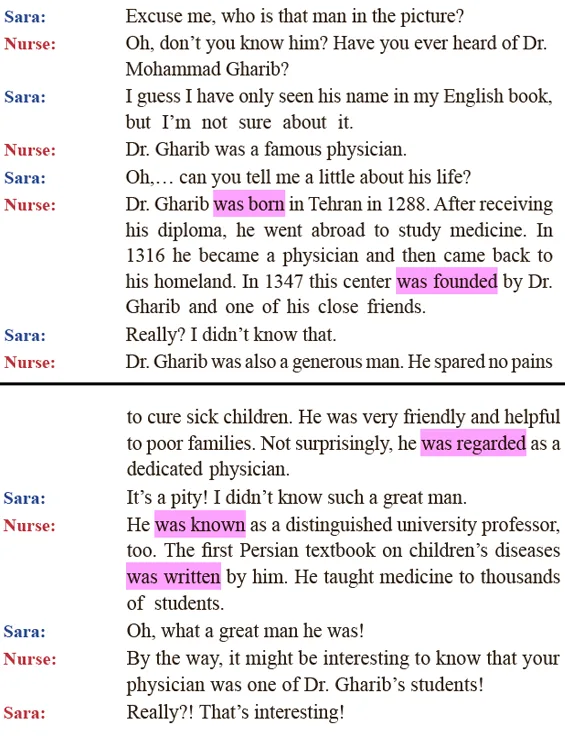
Passive Voices (حالتهای مجهول) در مکالمه:
- was born – متولد شد
- was founded – تأسیس شد
- was regarded – شناخته شد / در نظر گرفته شد
- was known – شناخته شده بود
- was written – نوشته شد
***
E. Read the following paragraph and choose the best verb forms.
پاراگراف زیرا بخوانید و بهترین شکل فعل را انتخاب کنید.
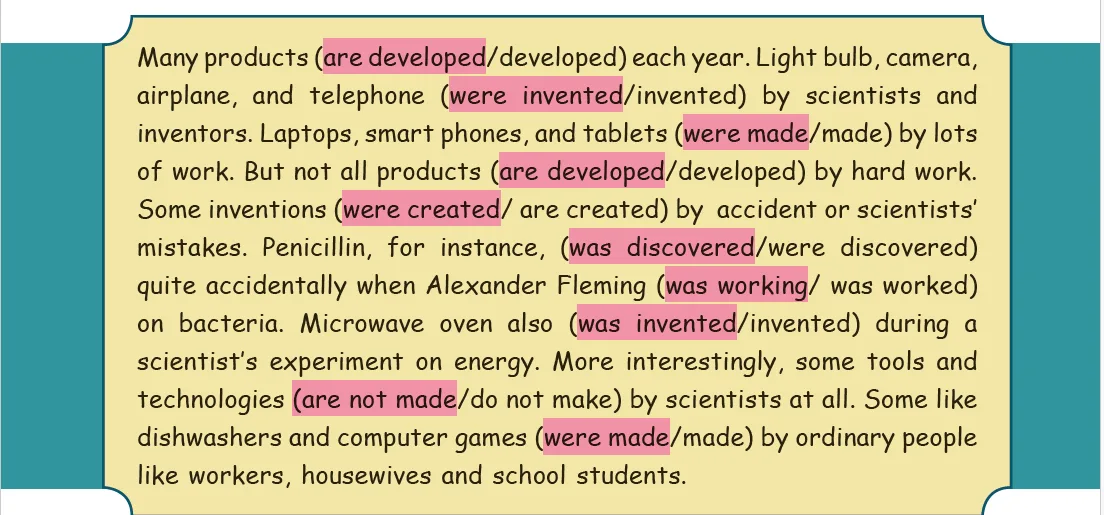
Many products are developed each year.
محصولات زیادی هر سال توسعه داده میشوند.
Light bulb, camera, airplane, and telephone were invented by scientists and inventors.
لامپ، دوربین، هواپیما و تلفن توسط دانشمندان و مخترعان اختراع شدند.
Laptops, smart phones, and tablets were made by lots of work.
لپتاپها، تلفنهای هوشمند و تبلتها با تلاش زیادی ساخته شدند.
But not all products are developed by hard work.
اما همه محصولات با تلاش زیاد توسعه داده نمیشوند.
Some inventions were created by accident or scientists’ mistakes.
بعضی اختراعات بر اثر اتفاق یا اشتباهات دانشمندان ایجاد شدند.
Penicillin, for instance, was discovered quite accidentally when Alexander Fleming was working on bacteria.
برای مثال، پنیسیلین کاملاً اتفاقی کشف شد زمانی که الکساندر فلمینگ روی باکتریها کار میکرد.
Microwave oven also was invented during a scientist’s experiment on energy.
فر مایکروویو نیز در طول آزمایش یک دانشمند درباره انرژی اختراع شد.
More interestingly, some tools and technologies are not made by scientists at all.
جالبتر اینکه بعضی ابزارها و فناوریها اصلاً توسط دانشمندان ساخته نمیشوند.
Some like dishwashers and computer games were made by ordinary people like workers, housewives and school students.
بعضی از آنها مانند ماشینهای ظرفشویی و بازیهای کامپیوتری توسط افراد عادی مانند کارگران، زنان خانهدار و دانشآموزان ساخته شدند.
***
F. Pair up and talk about the things that happened in the past without mentioning the doer.
و. گروه دوتایی تشکیل دهید و بدون ذکر کنندهی کار در مورد چیزهایی که در گذشته روی داده صحبت کنید.
Example: The window was broken. – مثال: پنجره شکسته بود
1. The door was opened. در باز شد
2. The cake was eaten. کیک خورده شد
3. The letter was sent yesterday. نامه دیروز فرستاده شد
4. The classroom was cleaned. کلاس تمیز شد
5. The car was repaired last week. ماشین هفتهٔ گذشته تعمیر شد.
معنی صفحه 31 زبان انگلیسی دوازدهم
همچنین ببینید – See Also
Tag Questions (پرسش تأییدی)
Tag Question یک سؤال کوتاه است که در پایان جمله میآید و برای تأیید گرفتن، اطمینان پیدا کردن یا جلب موافقت مخاطب استفاده میشود.
قوانین ساخت Tag Question
- اگر جمله مثبت باشد، Tag منفی میشود.
Positive → Negative Tag
Mina is happy, isn’t she? – مینا خوشحال است، مگر نه؟
He’s writing an email, isn’t he? – او در حال نوشتن یک ایمیل است، مگر نه؟
The girls were weaving a carpet, weren’t they? – دخترها در حال بافتن یک فرش بودند، مگر نه؟
They are going to Hamedan, aren’t they? – آنها به همدان میروند، مگر نه؟
The boys have broken the window, haven’t they? – پسرها پنجره را شکستهاند، مگر نه؟
Your sister has passed the exam, hasn’t she? – خواهرت امتحان را قبول شده است، مگر نه؟
***
B. Go to Part ‘Grammar’ of your Workbook and do C.
به قسمت دستور زبان کتاب کار خود بر وید و تمرین C را انجام دهید.
معنی صفحه 32 زبان انگلیسی دوازدهم
Listening & Speaking – گوش دادن وصحبت کردن
Speaking Strategy – راهبرد گفتوگو
Eliciting Agreement and Signaling Uncertainty – جلب موافقت و بیان تردید
A. We use ‘tag questions’ for two reasons: eliciting agreement (confirming facts) and signaling uncertainty.
ما از سؤال کوتاه به دو دلیل استفاده میکنیم: استنباط توافق (تأیید حقایق) و نشان دادن عدم قطعیت.
Sam has not come to work. I’ve heard he’s sick, isn’t he?
سام به سر کار نیامده است. شنیدهام مریض است، مگر نه؟
Oh, yes. He was not well yesterday.
اوه، بله. او دیروز حالش خوب نبود.
What’s wrong with him?
مشکلش چیست؟
The doctors are checking his health condition.
پزشکان در حال بررسی وضعیت سلامتی او هستند.
It isn’t something serious, is it?
چیز جدیای نیست، مگر نه؟
I hope not.
امیدوارم اینطور نباشد.
***
More Examples : مثال های بیشتر
He’s really generous, isn’t he?
او واقعاً سخاوتمند است، مگر نه؟
They are going to leave here, aren’t they?
آنها قرار است اینجا را ترک کنند، مگر نه؟
This cannot be true, can it?
این نمیتواند حقیقت داشته باشد، مگر نه؟
جواب صفحه 33 زبان انگلیسی یازدهم
B.Listen to the following conversations and answer the questions.
به مکالمههای زیر گوش دهید و به سوالها پاسخ دهید.
گفتگوی 1 – Conversation 1
Behzad: How’s everything, Amin? You seem to be busy these days, don’t you?
بهزاد: همه چی چطوره امین؟ به نظر می رسد این روزها سرتان شلوغ است، اینطور نیست؟
Amin: I’m OK Behzad. I’m working on a new project. I’m really tired.
امین: من خوبم بهزاد. دارم روی یک پروژه جدید کار میکنم من واقعا خسته هستم.
Behzad: But your health is really important, isn’t it?
بهزاد: اما سلامتی شما واقعاً مهم است، اینطور نیست؟
Amin: I know. But what about work, money, responsibility, …?
امین: میدونم. اما در مورد کار، پول، مسئولیت و … چطور؟
We need to consider them all, don’t we?
ما باید همه آنها را در نظر بگیریم، اینطور نیست؟
Behzad:Yes, but health is on top of everything.
بهزاد:بله، اما سلامتی بالاتر از همه چیز است.
***
Why is Amin busy these days?
چرا امین این روزها مشغول است؟
He is working on a new project.
او در حال کار بر روی یک پروژه جدید است.
What does Behzad think about health?
بهزاد در مورد سلامتی چگونه فکر می کند؟
Health is the most important thing of all.
سلامتی از همه چیز مهمتر است.
***
Pair up and ask your friends some questions that elicit agreement or confirm facts. You may use the topics in the box.
گروههای دوتایی تشکیل دهید و از دوستانتان سوالاتی بپرسید که حقایق توافقی را استخراج کنید. می توانید از موضوعات داخل کادر استفاده کنید.
weather, future job, a place to live
جواب:
Weather (آبوهوا)
The weather is nice today, isn’t it?
امروز هوا خوب است، مگر نه؟
Future job (شغل آینده)
You want to be a doctor, don’t you?
تو میخواهی پزشک شوی، مگر نه؟
A place to live (محل زندگی)
You like living in a big city, don’t you?
تو دوست داری در یک شهر بزرگ زندگی کنی، مگر نه؟
***
Conversation 2
Roya: We are going to the gym on Friday. Will you come with us, Mina?
رویا: جمعه میریم باشگاه. مینا با ما میای؟
Mina: I don’t think so.
مینا: فکر نمیکنم.
Roya: You don’t like sports, do you?
رویا: تو ورزش دوست نداری، نه؟
Mina: Actually, I don’t know. I think it depends on the type of sport.
مینا: در واقع، من نمی دانم. به نظر من بستگی به نوع ورزش دارد.
Roya:You Prefer team sports more, don’t you?
رویا: شما ورزش های گروهی را بیشتر ترجیح می دهید، اینطور نیست؟
Mina: Well, it seems to be OK. But honestly, I like less active sports like chess.
مینا: خب، به نظر خوبه. اما صادقانه بگویم، من ورزش های کمتر فعالی مانند شطرنج را دوست دارم.
Roya: Oh, I see.
رویا: اوه، می بینم.
***
Where are they going?
آنها کجا می روند؟
They are going to the gym.
آنها به ورزشگاه می روند.
Why does Mina prefer chess?
چرا مینا شطرنج را ترجیح می دهد؟
Because she likes less active
چون او فعالیت کمتری را دوست دارد
***
Pair up and ask your friends some questions that signal uncertainty. You may use the topics in the box.
گروهایی دوتایی تشکیل دهید و از دوستانتان سوالاتی بپرسید که نشان دهندهی عدم اطمینان است. می توانید از موضوعات داخل کادر استفاده کنید.
future plans, health condition, problems
برنامه های آینده، وضعیت سلامتی، مشکلات
Future plans (برنامههای آینده)
You aren’t going to travel tomorrow, are you?
تو قرار نیست فردا سفر کنی، مگر نه؟
Health condition (وضعیت سلامتی)
It isn’t something serious, is it?
چیز جدیای نیست، مگر نه؟
Problems (مشکلات)
This problem can’t be difficult, can it?
این مشکل نمیتواند سخت باشد، مگر نه؟
جواب و معنی صفحه 34 زبان انگلیسی دوازدهم
Compound Sentences – جملات مرکب
We have learned that every sentence must have at least one subject and one verb. Such a sentence is called a simple sentence. A sentence with more than one subject, more than one verb and a connecting word such as and, or, but or so is called a compound sentence.
ما یاد گرفتهایم که هر جمله باید حداقل یک فاعل و یک فعل داشته باشد. چنین جملهای جملهٔ ساده (Simple Sentence) نامیده میشود.
جملهای که بیش از یک فاعل، بیش از یک فعل و یک کلمهٔ ربط مانند and (و)، or (یا)، but (اما)، so (بنابراین/پس) داشته باشد، جملهٔ مرکب (Compound Sentence) نامیده میشود.
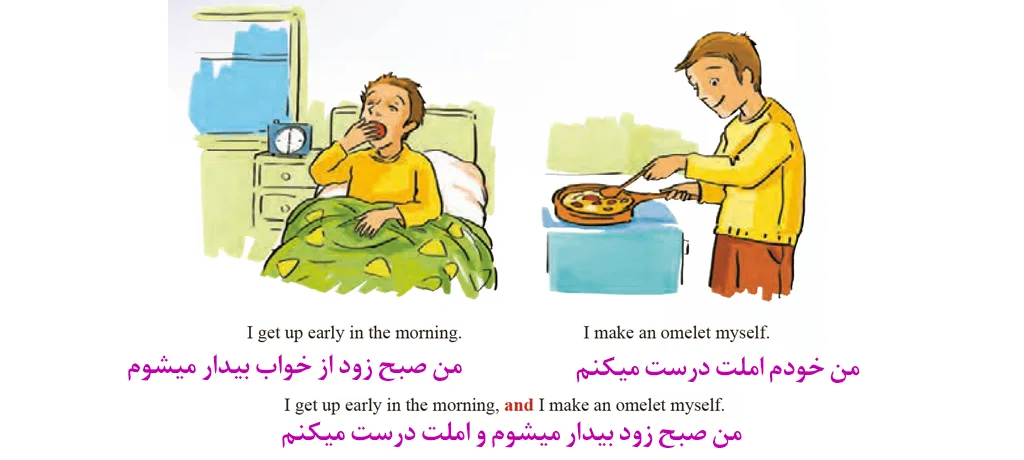
1) Addition
‘and’ shows similar activities or feelings
“و” فعالیت ها یا احساسات مشابهی را نشان می دهد.
جواب صفحه 35 زبان انگلیسی دوازدهم
2) Contrast – تضاد
‘but’ shows a contrast or difference
اما یک تفاوت یا تضاد را نشان میدهد.

***
A. Complete the following sentences with ‘and’ or ‘but’.
آ. جملات زیر را با and یا but کامل کنید.
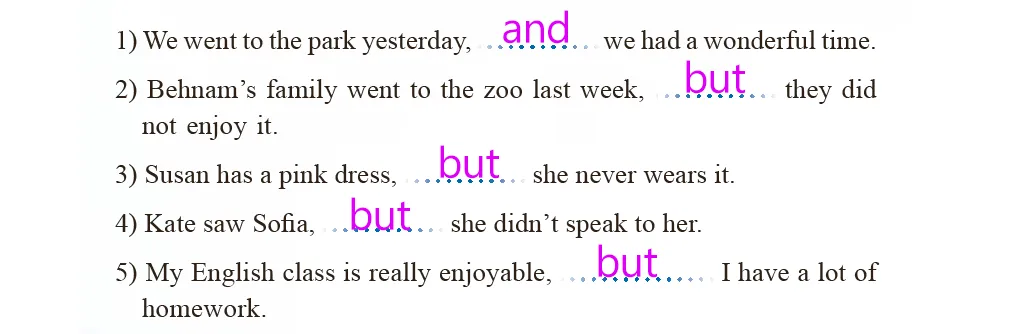
1 – We went to the park yesterday, _and_ we had a wonderful time.
دیروز به پارک رفتیم و اوقات فوقالعادهای داشتیم.
2 – Behnam’s family went to the zoo last week, _but_ they did not enjoy it.
خانوادهٔ بهنام هفتهٔ گذشته به باغوحش رفتند، اما از آن لذت نبردند.
3 – Susan has a pink dress, _but_ she never wears it.
سوزان یک لباس صورتی دارد، اما هرگز آن را نمیپوشد.
4 – Kate saw Sofia, _but_ she didn’t speak to her.
کیت سوفیا را دید، اما با او صحبت نکرد.
5 – My English class is really enjoyable, _but_ I have a lot of homework.
کلاس زبان انگلیسی من واقعاً لذتبخش است، اما تکالیف زیادی دارم.
جواب صفحه 36 زبان انگلیسی دوازدهم
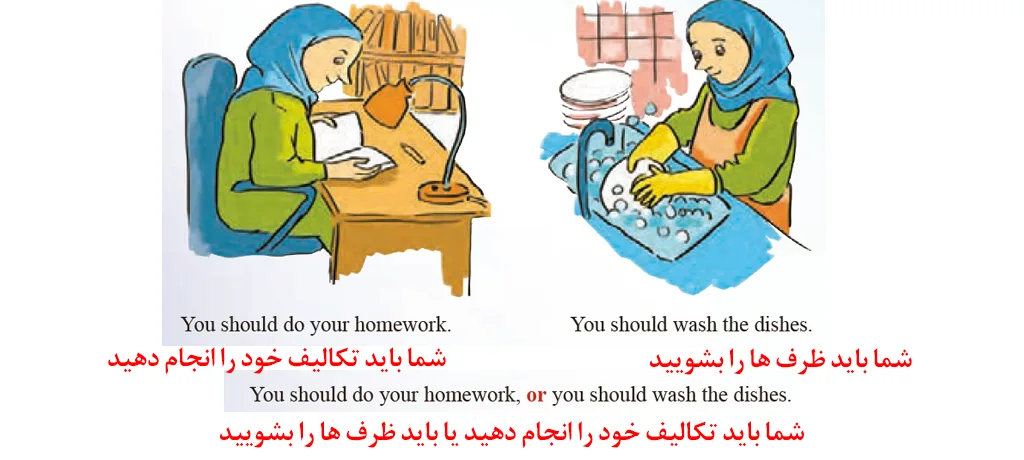
3) Choice
‘or’ shows two choices
“یا” دو گزینه را نشان می دهد.
***
4) Result
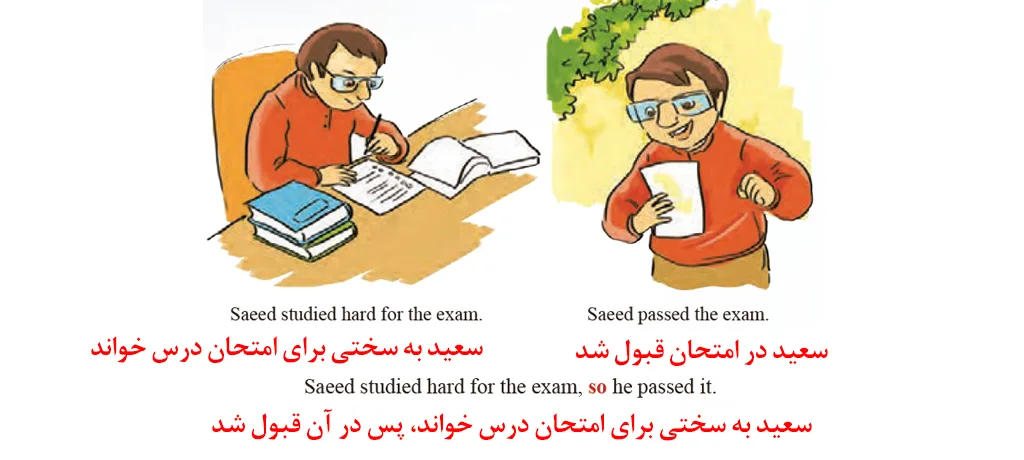
‘so’ shows that the second sentence is the result of the first one
So نشان دهنده این موضوع است که جمله دوم نتیجه و حاصل جمله اول است
جواب صفحه 37 زبان انگلیسی دوازدهم
B. Complete the following sentences with ‘or’ or ‘so’.
جملات زیرا با or یا so کامل کنید.
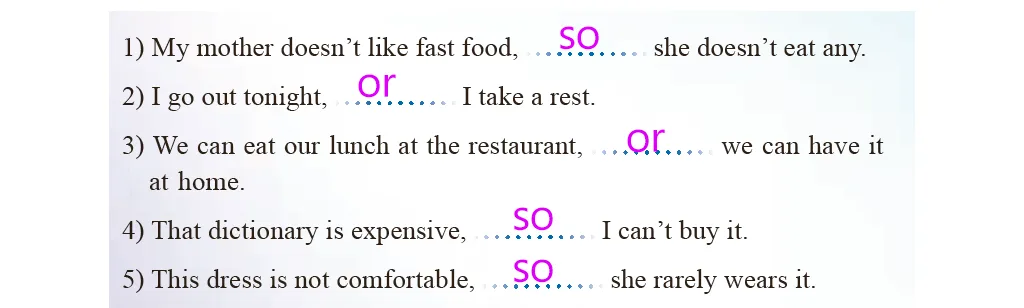
- مادرم غذای فستفود را دوست ندارد، بنابراین هیچوقت از آن نمیخورد.
- امشب یا بیرون میروم، یا استراحت میکنم.
- میتوانیم ناهارمان را در رستوران بخوریم، یا آن را در خانه بخوریم.
- آن فرهنگ لغت گران است، بنابراین نمیتوانم آن را بخرم.
- این لباس راحت نیست، بنابراین او بهندرت آن را میپوشد.
Note:
1- Use a comma before and, or, but and so when you combine two sentences.
۱– وقتی دو جمله را با and، or، but یا so به هم وصل میکنید، قبل از این کلمات از ویرگول (،) استفاده کنید.
2- You can replace the repeated nouns with suitable pronouns.
۲– میتوانید اسمهای تکراری را با ضمیرهای مناسب جایگزین کنید.
جواب صفحه 38 زبان انگلیسی دوازدهم
C. Combine the two sentences with ‘and’, ‘but’, ‘or’ or ‘so’.
هر جفت از جملات زیر را بایکی از کلمات and , but , orیا so تکمیل کنید.
- Joseph is very busy today, so he cannot watch TV.
- My brother has a lot of books, but he never reads them.
- We should do a lot of homework, but we don’t have enough time.
- Sepideh likes spaghetti, but her grandmother hates spaghetti.
- You can buy this coat, or you can buy those shoes.
- جوزف امروز خیلی سرش شلوغ است، بنابراین نمیتواند تلویزیون تماشا کند.
- برادرم کتابهای زیادی دارد، اما هرگز آنها را نمیخواند.
- ما باید تکالیف زیادی انجام دهیم، اما وقت کافی نداریم.
- سپیده اسپاگتی را دوست دارد، اما مادربزرگش از اسپاگتی متنفر است.
- میتوانی این کت را بخری، یا میتوانی آن کفشها را بخری.
***
Complete the sentences.
جملات را کامل کنید.
- I like learning Chinese, but it is difficult.
- These shoes are not comfortable, so I don’t wear them.
- You must study well, and you should do your homework.
- I like swimming, but I don’t like diving.
- You can install a mobile dictionary, or you can use a paper dictionary.
- من یادگیری زبان چینی را دوست دارم، اما سخت است.
- این کفشها راحت نیستند، بنابراین آنها را نمیپوشم.
- تو باید خوب درس بخوانی، و باید تکالیفت را انجام دهی.
- من شنا کردن را دوست دارم، اما شیرجه زدن را دوست ندارم.
- میتوانی یک فرهنگ لغت روی تلفن همراه نصب کنی، یا میتوانی از یک فرهنگ لغت کاغذی استفاده کنی.
جواب صفحه 39 زبان انگلیسی دوازدهم
E. Write five real compound sentences about yourself, your family or friends.
پنج جمله ترکیبی واقعی در مورد خودتان، خانواده یا دوستانتان بنویسید.
- I like playing football, and I play every weekend.
- My mother is a teacher, and she loves her job.
- My father works very hard, but he always has time for our family.
- My best friend likes music, and he plays the guitar.
- My sister wants to be a doctor, so she studies very hard.
- من فوتبال بازی کردن را دوست دارم، و هر آخر هفته فوتبال بازی میکنم.
- مادرم معلم است، و شغلش را دوست دارد.
- پدرم خیلی سخت کار میکند، اما همیشه برای خانوادهمان وقت دارد.
- بهترین دوستم موسیقی را دوست دارد، و گیتار مینوازد.
- خواهرم میخواهد پزشک شود، بنابراین خیلی سخت درس میخواند.
***
F. Go back to the Reading. Find three simple and three compound sentences. Underline the subjects and circle the verbs.
و. به قسمت خواندن برگردید. سه نمونه از جمله ساده و سه نمونه از جمله مرکب پیدا کنید. زیر فاعلها خط بکشید و دور فعلها دایره بکشید.
Three Simple Sentences
- Her young son was reading a newspaper. – پسر جوانش در حال خواندن روزنامه بود
- The mother went to her room. – مادر به اتاقش رفت.
- The son looked at the page. – پسر به صفحه نگاه کرد
Three Compound Sentences
- The mother went to her room and came back with an old diary. – مادر به اتاقش رفت و با یک دفتر خاطرات قدیمی برگشت.
- The son looked at the page, paused and started reading it aloud. سر به صفحه نگاه کرد، مکث کرد و شروع به بلند خواندن آن کرد
- The old woman hugged her son, kissed him and said calmly, “We must care for those who once cared for us.” – پیرزن پسرش را در آغوش گرفت، او را بوسید و با آرامش گفت: «ما باید از کسانی که روزی از ما مراقبت کردهاند، مراقبت کنیم
معنی و جواب صفحه 41 زبان دوازدهم
A. Listen to the first part of an interview.
به اولین قسمت مصاحبه گوش دهید.
Dr. Asadi is answering this important question: “why is it important to care for our elders?” I think first of all we need to remember that they are our mothers and fathers, and our first teachers. They teach us how to love, how to care, how to give, how to forgive, and how to accept. Second, elders have more knowledge and wisdom than any one of us. They’ve come so far and they’ve learned so much, we have a responsibility to learn from that wisdom. But the most important thing is their experience. We may or may not know of all the ups and downs they’ve faced in life but they’ve definitely gained experience that is worth respecting and learning from. Our elders may hide much pain from us because they don’t want us to feel the pain, the least we can do is appreciate them for all they’ve gone through and learn from their insight into situations.
دکتر اسدی در حال پاسخ دادن به این سؤال مهم است: «چرا مراقبت از سالمندان اهمیت دارد؟»
من فکر میکنم قبل از هر چیز باید به یاد داشته باشیم که آنها پدران و مادران ما و نخستین معلمان ما هستند. آنها به ما یاد میدهند چگونه عشق بورزیم، چگونه مراقبت کنیم، چگونه ببخشیم، چگونه دیگران را عفو کنیم و چگونه پذیرش داشته باشیم.
دوم اینکه، سالمندان نسبت به هر یک از ما دانش و خرد بیشتری دارند. آنها مسیر طولانی زندگی را پیمودهاند و چیزهای زیادی آموختهاند؛ بنابراین ما مسئولیت داریم از خرد و دانایی آنها بیاموزیم.
اما مهمترین چیز، تجربهی آنهاست. ممکن است از تمام فراز و نشیبهایی که در زندگی با آنها روبهرو شدهاند آگاه باشیم یا نباشیم، اما بدون شک تجربههای ارزشمندی به دست آوردهاند که شایستهی احترام و یادگیری است.
سالمندان ما ممکن است دردهای زیادی را از ما پنهان کنند، زیرا نمیخواهند ما رنج بکشیم. کمترین کاری که میتوانیم انجام دهیم این است که از آنها به خاطر تمام سختیهایی که پشت سر گذاشتهاند قدردانی کنیم و از بینش و تجربهی آنها در موقعیتهای مختلف درس بگیریم.
***
1. Answer the following questions based on what you just heard.
بر اساس آنچه که گوش کردید به سوالات زیر پاسخ دهید.
Why is knowing about the experience of our parents important?
چرا دانستن تجارب والدینمان مهم است؟
We can learn from their experience.
Why are our parents our first teachers?
چرا والدینمان اولین معلمان ما هستند؟
They teach how to love, how to care, how to give, how to forgive, and how to accept.
***
2. Listen again and write down three important points mentioned.
مجدد گوش کنید و سه نکتهی مهم ذکر شده را یادداشت کنید.
- Our parents are our first teachers. – پدر و مادر ما اولین معلمان ما هستند.
- We have to learn from their wisdom. – ما باید از خرد و دانایی آنها یاد بگیریم.
- We have to respect our parents. – ما باید به پدر و مادرمان احترام بگذاریم.
***
B. Now read the rest.
ب. اکنون ادامه را بخوانید.
Yet another important thing is our heritage and culture. We have much to learn from our parents regarding our heritage, to be proud of our past. This heritage and history brings a sense of belonging. Most importantly, it brings us a sense of identity of our past and the responsibility to protect it for our future generations. What I can add at the end is the role of our parents’ morals, values, and principles in our lives. Our elders have either learned, created or have been brought up with a set of morals, values and principles in their lives. Our elders want the best for us and they are willing to tell us what set of rules and guidelines have made them successful, and hopefully, peaceful.
نکته مهم دیگر، میراث و فرهنگ ماست. ما چیزهای زیادی درباره میراث فرهنگیمان از پدر و مادرمان میآموزیم و یاد میگیریم که به گذشته خود افتخار کنیم.
این میراث و تاریخ، به ما احساس تعلق میدهد. مهمتر از همه، به ما هویت میبخشد و این مسئولیت را بر عهده ما میگذارد که آن را برای نسلهای آینده حفظ کنیم.
در پایان، میتوانم به نقش اخلاق، ارزشها و اصول پدر و مادرمان در زندگی اشاره کنم. سالمندان ما در طول زندگی خود مجموعهای از اخلاق، ارزشها و اصول را یا آموختهاند، یا خود به وجود آوردهاند، یا با آنها بزرگ شدهاند.
سالمندان ما بهترینها را برای ما میخواهند و مایلاند مجموعهای از قوانین و راهنماییهایی را که باعث موفقیت و امیدواریم آرامش آنها شده است، به ما آموزش دهند.
***
3. Underline all ‘passive tenses’. Make three questions about the important points. Then answer them.
۳. زیر همه جملات مجهول خط بکشید. سه پرسش در مورد نکات مهم بسازید. سپس به آنها پاسخ دهید.
have been brought up
(Present Perfect Passive)
معنی: بزرگ شدهاند / تربیت شدهاند
1 – What can we learn from our parents?
ما چه چیزی میتوانیم از والدینمان یاد بگیریم؟
We can learn about our heritage, morals, values, and principles from our parents.
ما میتوانیم درباره میراث، اخلاق، ارزشها و اصول از والدینمان یاد بگیریم.
2 – Why is our heritage important?
چرا میراث ما مهم است؟
Because it gives us a sense of belonging and identity.
زیرا به ما احساس تعلق و هویت میدهد.
3 – What do our elders want for us?
سالمندان ما چه چیزی برای ما میخواهند؟
They want the best for us and they want us to learn from their experiences.
آنها بهترینها را برای ما میخواهند و میخواهند ما از تجربههایشان یاد بگیریم.
***
C. Work in pairs. Ask and answer.
ج. دوتایی تمرین کنید. بپرسید و پاسخ دهید.
1 – How can we learn from our parents in our lives?ما چگونه میتوانیم در زندگی از والدینمان یاد بگیریم؟
We can learn from our parents by listening to their advice, experiences, wisdom, morals, values, and principles.
ما میتوانیم با گوش دادن به توصیهها، تجربهها، خرد، اخلاق، ارزشها و اصول والدینمان از آنها یاد بگیریم.
2 – How important is it to protect our culture for our next generation?
محافظت از فرهنگمان برای نسل آیندهمان چقدر مهم است؟
It is very important to protect our culture because it gives us a sense of belonging and identity, and we have a responsibility to protect it for future generations.
محافظت از فرهنگمان بسیار مهم است، زیرا به ما احساس تعلق و هویت میدهد و ما مسئولیت داریم آن را برای نسلهای آینده حفظ کنیم.
3 – Why are our parents our blessing?
چرا والدین ما نعمت هستند؟
Our parents are our blessing because they are our first teachers and they teach us how to love, care, give, forgive, and accept.
والدین ما نعمت هستند، زیرا آنها اولین معلمان ما هستند و به ما یاد میدهند چگونه عشق بورزیم، مراقبت کنیم، ببخشیم و پذیرش داشته باشیم.
جواب ورک بوک زبان انگلیسی دوازدهم
جواب درس اول کتاب کار زبان دوازدهم
جواب صفحه 8 کتاب کار زبان دوازدهم
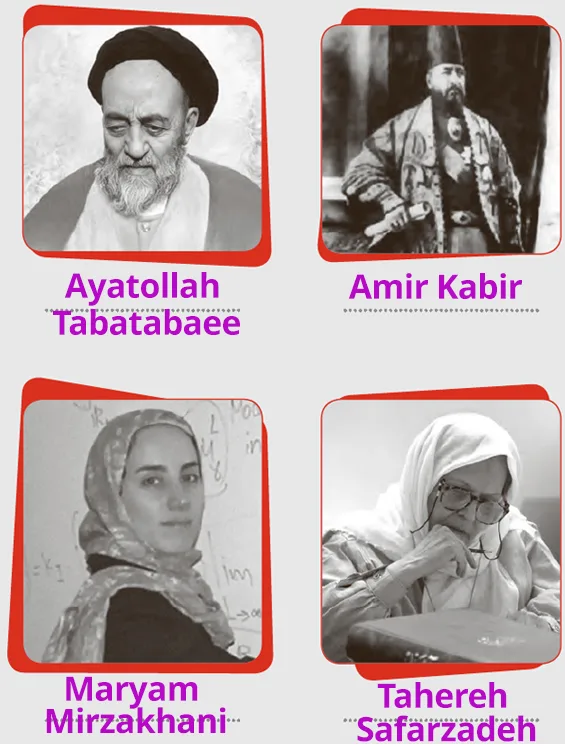
A. Write the names of the following people.
نام افراد زیر را بنویسید.
جواب صفحه 9 کتاب کار زبان دوازدهم
***
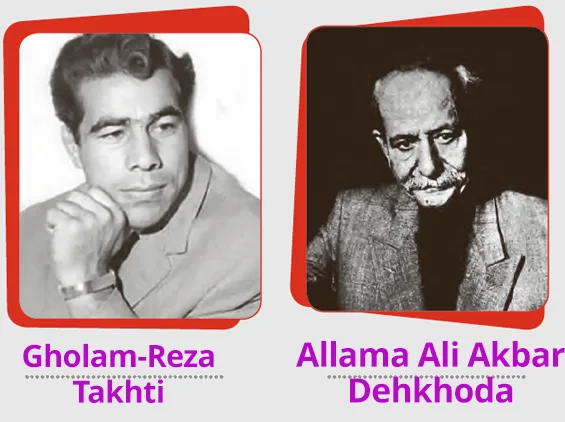
B. Do you know why we appreciate their work?
آیا میدانید چرا از کارهای آنها قدردانی میکنیم؟
Answer: We appreciate their work because they made great contributions to Iran and the world. They helped people through science, education, literature, sports, religion, and public service. Their achievements inspire us to work hard and serve our country.
Gholam-Reza Takhti: He was a famous wrestler and was respected for his kindness and sportsmanship.
Maryam Mirzakhani: She was a brilliant mathematician and the first woman to win the Fields Medal.
Amir Kabir: He was a great prime minister of Iran. He introduced many important reforms and founded Dar ul-Funun, the first modern school in Iran.
Tahereh Safarzadeh: She was a famous poet, writer, and translator.
Ayatollah Tabatabaee: He was a great Islamic scholar and wrote important books on the Quran and philosophy.
Allama Ali Akbar Dehkhoda: He was a famous writer, linguist, and the author of the Dehkhoda Dictionary, one of the greatest Persian dictionaries.
جواب: ما از کارهای آنها قدردانی میکنیم، زیرا آنها خدمات بزرگی به ایران و جهان کردهاند. آنها از طریق علم، آموزش، ادبیات، ورزش، دین و خدمات عمومی به مردم کمک کردند. دستاوردهای آنها به ما انگیزه میدهد که سخت تلاش کنیم و به کشورمان خدمت کنیم.
Gholam-Reza Takhti: او کشتیگیر مشهوری بود و به خاطر مهربانی و جوانمردیاش مورد احترام بود.
Maryam Mirzakhani: او ریاضیدان برجستهای بود و نخستین زنی بود که مدال فیلدز را دریافت کرد.
Amir Kabir: او صدراعظم بزرگ ایران بود. اصلاحات مهمی انجام داد و دارالفنون، نخستین مدرسهٔ مدرن ایران، را تأسیس کرد.
Tahereh Safarzadeh: او شاعر، نویسنده و مترجم مشهور ایرانی بود.
Ayatollah Tabatabaee: او دانشمند بزرگ اسلامی بود و کتابهای مهمی دربارهٔ قرآن و فلسفه نوشت.
Allama Ali Akbar Dehkhoda: او نویسنده و زبانشناس مشهور و نویسندهٔ لغتنامهٔ دهخدا، یکی از بزرگترین فرهنگهای زبان فارسی، بود.
جواب صفحه 10 کتاب کار زبان دوازدهم
Reading Comprehension
درک مطلب
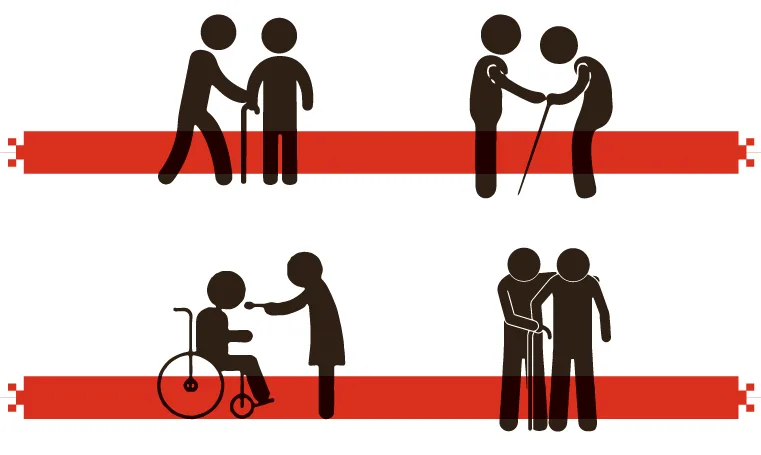
It is very important for us to respect our elders. It is also important to note that elders were not born elders; they were kids like us and now have grown old. A few years hence we will also grow older. If today we respect them, our present and future generations will carry those values and will learn to respect us as well when we grow old.
احترام گذاشتن به بزرگترها برای ما بسیار مهم است. همچنین مهم است بدانیم که بزرگترها از ابتدا پیر نبودهاند؛ آنها هم روزی مانند ما کودک بودند و اکنون پیر شدهاند. چند سال بعد، ما نیز پیر خواهیم شد. اگر امروز به آنها احترام بگذاریم، نسل کنونی و نسلهای آینده نیز این ارزشها را حفظ خواهند کرد و وقتی ما پیر شویم، به ما نیز احترام خواهند گذاشت.
Elders have a lot to share with us: their life experiences, their failures, their successes and many more. Thus we need to care for them because they deserve to be cared for. Respect and care for elders start with our parents as they are our first teachers in our life.
بزرگترها چیزهای زیادی برای به اشتراک گذاشتن با ما دارند؛ مانند تجربههای زندگی، شکستها، موفقیتها و بسیاری چیزهای دیگر. بنابراین باید از آنها مراقبت کنیم، زیرا شایستهٔ مراقبت هستند. احترام و مراقبت از بزرگترها از پدر و مادرمان آغاز میشود، زیرا آنها نخستین آموزگاران ما در زندگی هستند.
No matter what we do in our lives, who we are, and where we live, we must love them as they love us unconditionally. They feel honored when we appreciate their love and respect them. So it is our duty to help them when they need us because they are not young enough to handle things on their own like before.
فرقی نمیکند در زندگی چه کاری انجام میدهیم، چه کسی هستیم یا کجا زندگی میکنیم، باید آنها را دوست داشته باشیم؛ همانطور که آنها بدون هیچ قید و شرطی ما را دوست دارند. وقتی محبتشان را قدر بدانیم و به آنها احترام بگذاریم، احساس افتخار میکنند. پس وظیفهٔ ماست که هر زمان به ما نیاز داشتند به آنها کمک کنیم، زیرا دیگر مانند گذشته جوان نیستند که بتوانند همهٔ کارها را به تنهایی انجام دهند.
جواب صفحه 11 کتاب کار زبان دوازدهم
A.Using the following question starters, generate questions. Then answer them.
با استفاده از شروعکنندههای سؤال زیر، سؤال ایجاد کنید. سپس به آنها پاسخ دهید
1 – Why should we respect the elders?
Answer: Because the next generation learn to respect us.
چون نسل بعدی یاد میگیرند که به ما احترام بگذارند
2 – How can we get help from the elders?
Answer: We can learn from their life experiences, successes, and failures.
ما میتوانیم از تجربههای زندگی، موفقیتها و شکستهای آنها یاد بگیریم.
3 – What can we do to make our elders happy?
Answer: We can love, respect, appreciate, and help them.
میتوانیم آنها را دوست داشته باشیم، به آنها احترام بگذاریم، از آنها قدردانی کنیم و به آنها کمک کنیم.
4 – Who were our first teachers in life?
Answer: Our parents were our first teachers in life.
پدر و مادر ما اولین معلمان ما در زندگی بودند.
جواب صفحه 12 کتاب کار زبان دوازدهم
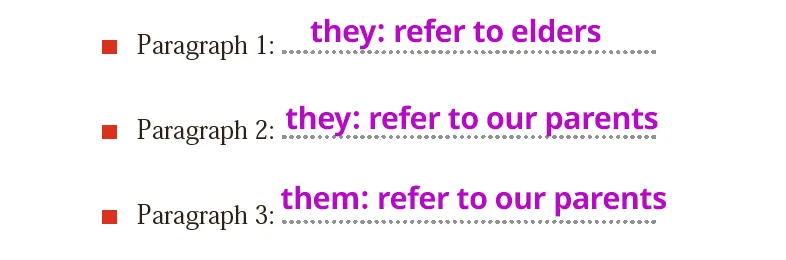
B.Find what the underlined pronouns refer to.
ضمایر خط کشیده شده به چه چیزی اشاره دارند را پیدا کنید.
جواب:
***
C. Skim the text and suggest a title for it.
متن را مرور کنید و عنوانی برای آن پیشنهاد کنید.
Answer: Why should we respect the elders?
جواب: چرا باید به بزرگترها احترام بگذاریم؟
جواب صفحه 13 کتاب کار زبان دوازدهم
A.Read the ‘text’ and find antonyms for the following words:
متن را بخوانید و متضاد کلمات زیر را بیابید:
1. Past ≠ future
2. Unreal ≠ real
3. Hate ≠ love
4. Finish ≠ start
۱. گذشته ≠ آینده
۲. غیرواقعی ≠ واقعی
۳. نفرت ≠ عشق
۴. پایان ≠ شروع
جواب صفحه 14 کتاب کار زبان دوازدهم
B. Match the definitions with the words.
تعاریف را با کلمات مطابقت دهید.
۱. all the people of about the same age within a society = a. generation
همه افراد در یک جامعه که تقریباً همسن هستند = نسل
۲. a lack of success in doing something = c. failure
نداشتن موفقیت در انجام کاری = شکست
۳. to be grateful for = d. appreciate
قدردان بودن = سزاوار بودن
۴. to be worthy = b. deserve
شایسته بودن = قدردانی
جواب صفحه 15 کتاب کار زبان دوازدهم
C. Fill in the blanks with the given words. Make the necessary changes.
جاهای خالی را با کلمات داده شده پر کنید. تغییرات لازم را انجام دهید
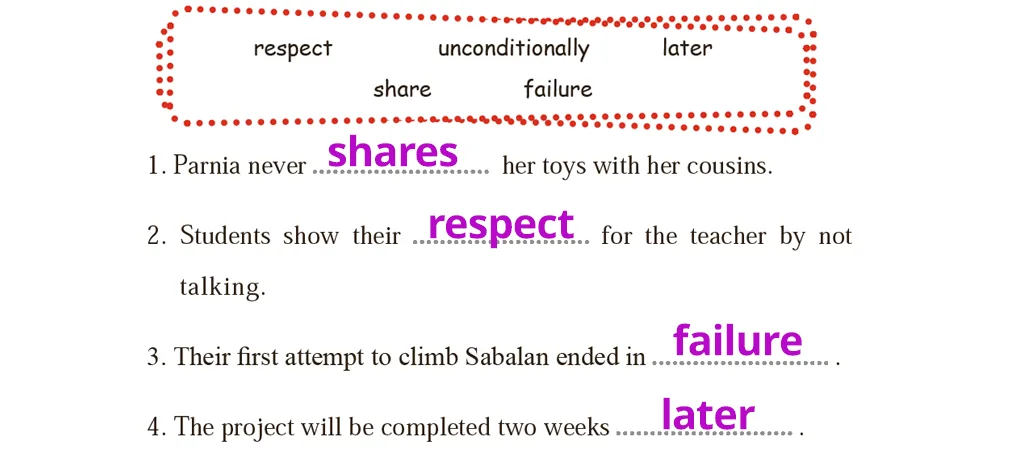
1. Parnia never shares her toys with her cousins.
2. Students show their respect for the teacher by not talking.
3. Their first attempt to climb Sabalan ended in failure.
4. The project will be completed two weeks later.
۱. پرنیا هرگز اسباببازیهایش را با پسرعموها و دخترعموهایش شریک نمیشود.
۲. دانشآموزان با صحبت نکردن، احترام خود را به معلم نشان میدهند.
۳. اولین تلاش آنها برای صعود به سبلان با شکست به پایان رسید.
۴. پروژه دو هفته بعد به پایان خواهد رسید.
جواب صفحه 16 کتاب کار زبان دوازدهم
D. Complete the following verbs with a noun or an adjective.
افعال زیر را با اسم یا صفت کامل کنید.
Answer:
grow old – پیر شدن
feel honored – احساس افتخار کردن
handle things – از عهدهٔ کارها برآمدن / کارها را انجام دادن
care for elders – از سالمندان مراقبت کردن
جواب صفحه 17 کتاب کار زبان دوازدهم
A. Make active and passive sentences.
جملات معلوم ومجهول بسازید.
1 . hunter / the cruel / the gazelle / killed
Active:
The cruel hunter killed the gazelle.
Passive:
The gazelle was killed by the cruel hunter.
معلوم: شکارچی بیرحم غزال را کشت.
مجهول: غزال توسط شکارچی بیرحم کشته شد.
2 . my mother / Sina / gave / for his birthday / a book
Active:
My mother gave Sina a book for his birthday.
Passive:
A book was given to Sina by my mother for his birthday.
معلوم: مادرم برای تولد سینا یک کتاب هدیه داد.
مجهول: یک کتاب برای تولد سینا توسط مادرم به سینا داده شد.
جواب صفحه 18 کتاب کار زبان دوازدهم
invented / Baird / the first television / in 1924
Active:
Baird invented the first television in 1924.
Passive:
The first television was invented by Baird in 1924.
ترجمه:
معلوم: بیرد نخستین تلویزیون را در سال ۱۹۲۴ اختراع کرد.
مجهول: نخستین تلویزیون در سال ۱۹۲۴ توسط بیرد اختراع شد.
4 . always / I / keep / in the fridge / the butter
Active:
I always keep the butter in the fridge.
Passive:
The butter is always kept in the fridge by me.
معلوم: من همیشه کره را در یخچال نگه میدارم.
مجهول: کره همیشه توسط من در یخچال نگهداری میشود.
5 . did not / inform / you / us / the results / about
Active:
You did not inform us about the results.
Passive:
We were not informed about the results by you.
معلوم: شما ما را از نتایج آگاه نکردید.
مجهول: ما توسط شما از نتایج آگاه نشدیم.
جواب صفحه 19 کتاب کار زبان دوازدهم
B. Write the passive verbs in the correct tenses.
شکل مجهول فعل را در زمانهای صحیح بنویسید.
The robber was found by the police last week. (find)
دزد هفتهٔ گذشته توسط پلیس پیدا شد.
The first fast food restaurants in our city were opened thirty years ago. (open)
اولین رستورانهای فستفود در شهر ما سی سال پیش افتتاح شدند.
I have two parrots. They are kept in the cage. (keep)
من دو طوطی دارم. آنها در قفس نگهداری میشوند.
Persian is spoken in Iran, Tajikistan and Afghanistan. (speak)
زبان فارسی در ایران، تاجیکستان و افغانستان صحبت میشود.
Jack’s money was stolen in the train. (steal) پول جک در قطار دزدیده شد.
جواب صفحه 20 کتاب کار زبان دوازدهم
Complete the following sentences with appropriate tag questions.
جملات زیر را با سوالات تگ مناسب کامل کنید.
It’s a lovely day, isn’t it?
امروز روز زیبایی است، مگر نه؟
You haven’t done your homework, have you?
تو تکلیفت را انجام ندادهای، درسته؟
There is a problem here, isn’t there?
اینجا یک مشکل وجود دارد، مگر نه؟
Hamid never says a word, does he?
حمید هیچوقت حرفی نمیزند، درسته؟
Kate forgot to feed the chickens, didn’t she?
کیت یادش رفت به مرغها غذا بدهد، مگر نه؟
جواب صفحه 21 کتاب کار زبان دوازدهم
A. Complete the sentences with and, or, but and so.
جملات را با and و or و but و so کامل کنید.
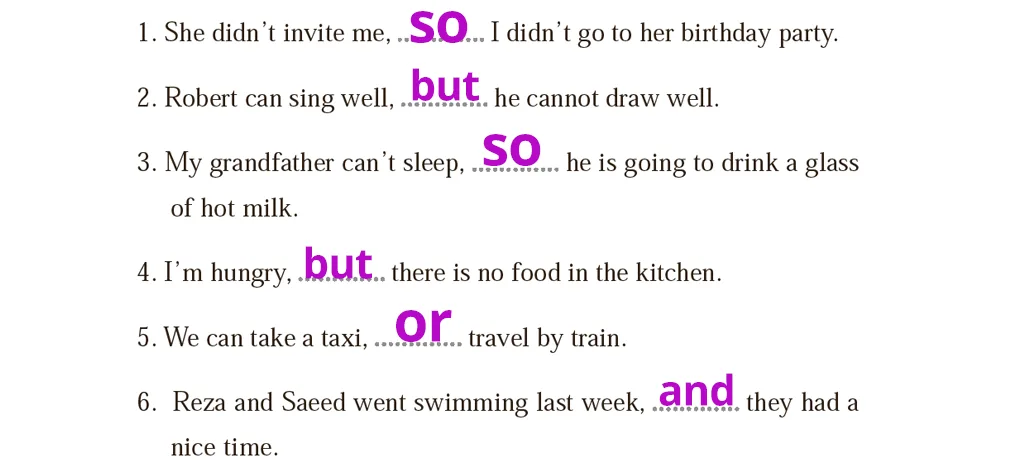
She didn’t invite me, so I didn’t go to her birthday party.
او مرا دعوت نکرد، بنابراین من به جشن تولدش نرفتم.
Robert can sing well, but he cannot draw well.
رابرت میتواند خوب آواز بخواند، اما نمیتواند خوب نقاشی بکشد.
My grandfather can’t sleep, so he is going to drink a glass of hot milk.
پدربزرگم نمیتواند بخوابد، بنابراین میخواهد یک لیوان شیر گرم بنوشد.
I’m hungry, but there is no food in the kitchen.
من گرسنهام، اما در آشپزخانه غذایی نیست.
We can take a taxi, or travel by train.
میتوانیم تاکسی بگیریم یا با قطار سفر کنیم.
Reza and Saeed went swimming last week, and they had a nice time.
رضا و سعید هفتهٔ گذشته به شنا رفتند و اوقات خوبی داشتند.
جواب صفحه 22 کتاب کار زبان دوازدهم
B. Correct the underlined words using and, but, or and so.
کلمات خط کشیده شده را با استفاده از and و but و or و so تصحیح کنید.
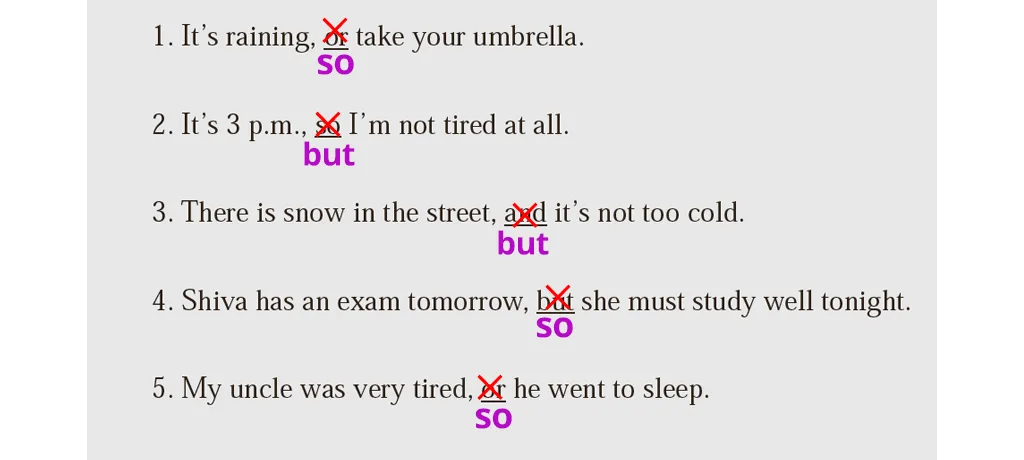
1 – باران میبارد، پس چترت را بردار.
2 – ساعت ۳ بعدازظهر است، اما اصلاً خسته نیستم.
3 – در خیابان برف هست، اما هوا خیلی سرد نیست.
4 – شیوا فردا امتحان دارد، بنابراین باید امشب خوب درس بخواند.
5 – عمویم خیلی خسته بود، بنابراین خوابید.
جواب صفحه 23 کتاب کار زبان دوازدهم
Put the words in correct order.
کلمات را به ترتیب صحیح قرار دهید.
asked / a question / my teacher / so / replied / I
Answer: My teacher asked a question, so I replied.
معلمم یک سؤال پرسید، بنابراین من پاسخ دادم.
studies / Mary / but / she / cannot / the exam / pass / a lot
Answer: Mary studies a lot, but she cannot pass the exam.
مری خیلی درس میخواند، اما نمیتواند در امتحان قبول شود.
went / my brother / to the library / at all / he / didn’t / but / study
Answer : My brother went to the library, but he didn’t study at all.
برادرم به کتابخانه رفت، اما اصلاً درس نخواند.
Reza / the class / attend / in hospital / he / cannot / so / is
Answer: Reza is in hospital, so he cannot attend the class.
رضا در بیمارستان است، بنابراین نمیتواند در کلاس شرکت کند.